
 Cattails are the punctuation of the marsh — commas, exclamation points, and the occasional ellipsis of a broken stalk.
The Grammar of Cattails
Stand at the edge of any slow-water marsh in late summer and you will see them: cattails, standing in loose formation along the bank, their brown heads held up like torches that have forgotten how to burn. They are so common that we stop seeing them. They are the furniture of the wetland, the background of a thousand photographs, the thing we brush past on our way to something more interesting. But spend an hour with them — really spend an hour — and they begin to look like something else entirely. They begin to look like language.
I do not mean this as a metaphor exactly. I mean that cattails have a grammar. They arrange themselves in sentences across the shallows, and if you read them slowly enough, they will tell you things about the water that no instrument can. A cluster of tall stalks leaning left means the wind has been steady from the west. A stand of shorter, denser plants means the soil is thin, the water shallow, the season already turning. A single broken stalk, bent at the neck like a question mark, means something passed through here — a deer, a dog, a child — and the marsh has not yet decided what to make of it.
Punctuation in the Shallows
The more time I spend in wetlands, the more I think of cattails as punctuation. A tight row of them along a channel is a colon, announcing that something is about to be said. A scattered few, isolated in open water, are commas, pausing the sentence of the marsh. A dense thicket, head-high and impenetrable, is a paragraph break — a place where the story stops and something new begins. And the seed heads, when they finally burst in late autumn and drift away on the wind, are ellipses, trailing off into the cold air with no clear ending in sight.
I have tried to write poems about cattails and failed, mostly because the cattails have already written themselves. They are more economical than I am. They do not waste words. A single stalk, seen against a gray sky, says everything that needs to be said about persistence — about standing in cold water for months, about holding your shape while the world around you freezes and thaws and freezes again. I have never managed that kind of persistence. I have never stood in one place for an entire winter, waiting for the ice to let go.
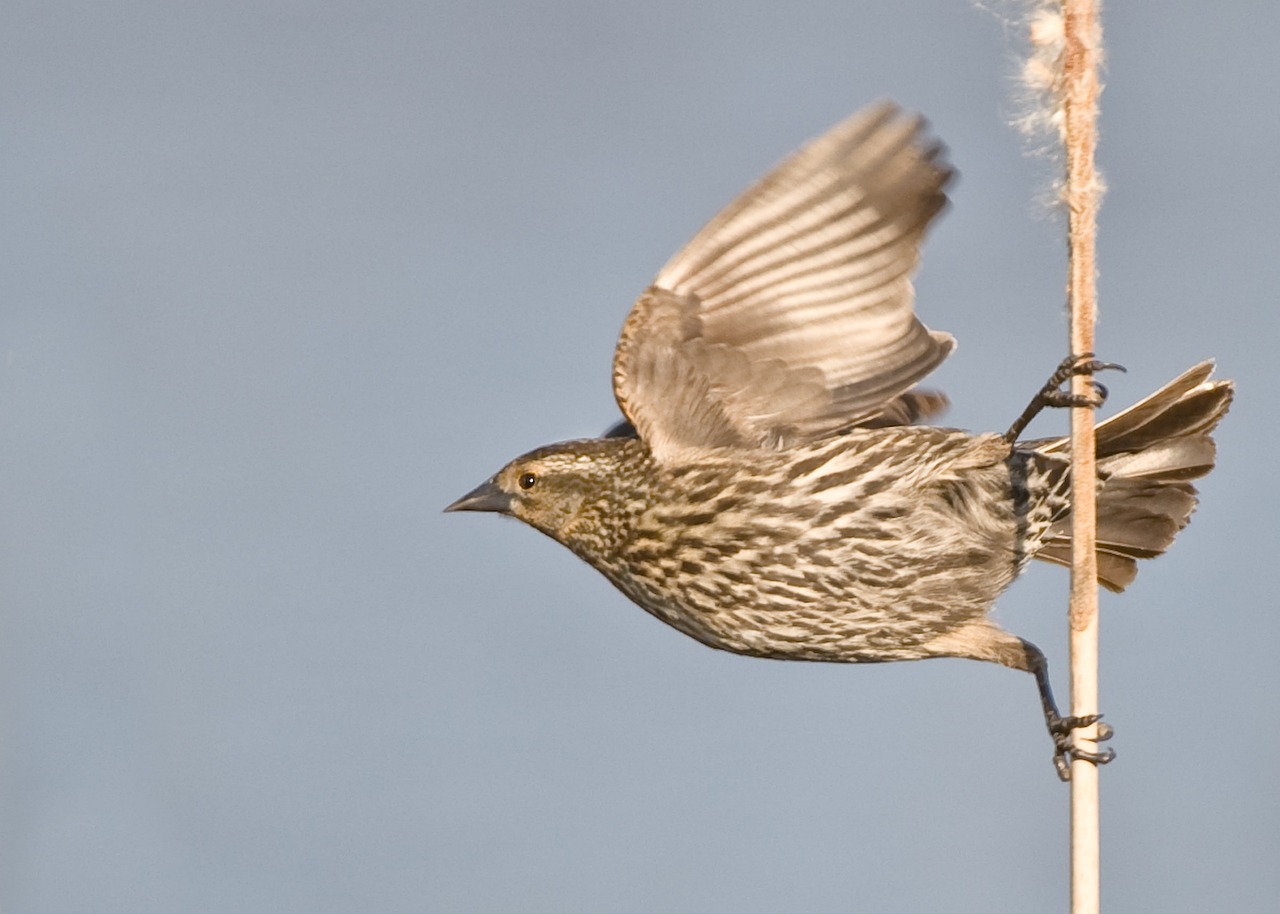
What I love most about cattails is that they do not ask to be loved. They are not showy. They do not bloom in bright colors or release perfume into the evening air. They simply stand there, year after year, doing the quiet work of holding the bank together, filtering the water, giving the red-winged blackbirds somewhere to perch. They are the unpaid laborers of the marsh, and they ask for nothing in return but the chance to keep standing.
Reading the Sentences of the Marsh
I have started keeping a small notebook of cattail sightings — not their locations exactly, but their arrangements. The way a particular stand leaned after a storm. The way a single stalk had been chewed by a muskrat and left half-finished, like a sentence abandoned mid-thought. The way the seed fluff caught the low October light and drifted across the water like slow snow. None of this is science. It is closer to reading, the way you might read a letter from an old friend who writes in a hand you have known for years.
The marsh is not silent, but it does not speak in words. It speaks in arrangements, in patterns, in the patient repetition of things that have been happening for ten thousand years. The cattails are its alphabet. The wind is its breath. The water is its grammar, holding everything together, carrying the meaning from one bank to the other. All we have to do is slow down enough to read.
I do not know if I will ever write the poem I want to write about cattails. Probably not. Some things resist translation. But I will keep standing at the edge of the marsh, notebook in hand, watching the brown heads nod in the wind, and I will keep trying to hear what they are saying. So far, the message seems to be: stay. Stay a little longer. Stay through the winter. Stay until the ice breaks and the water starts moving again. The marsh has all the time in the world, and it is willing to share.