
 A levee is neither land nor water but the line between them, and walking it at dusk is a lesson in living on the threshold.
Fog on the Water: A Meditation for Early Mornings
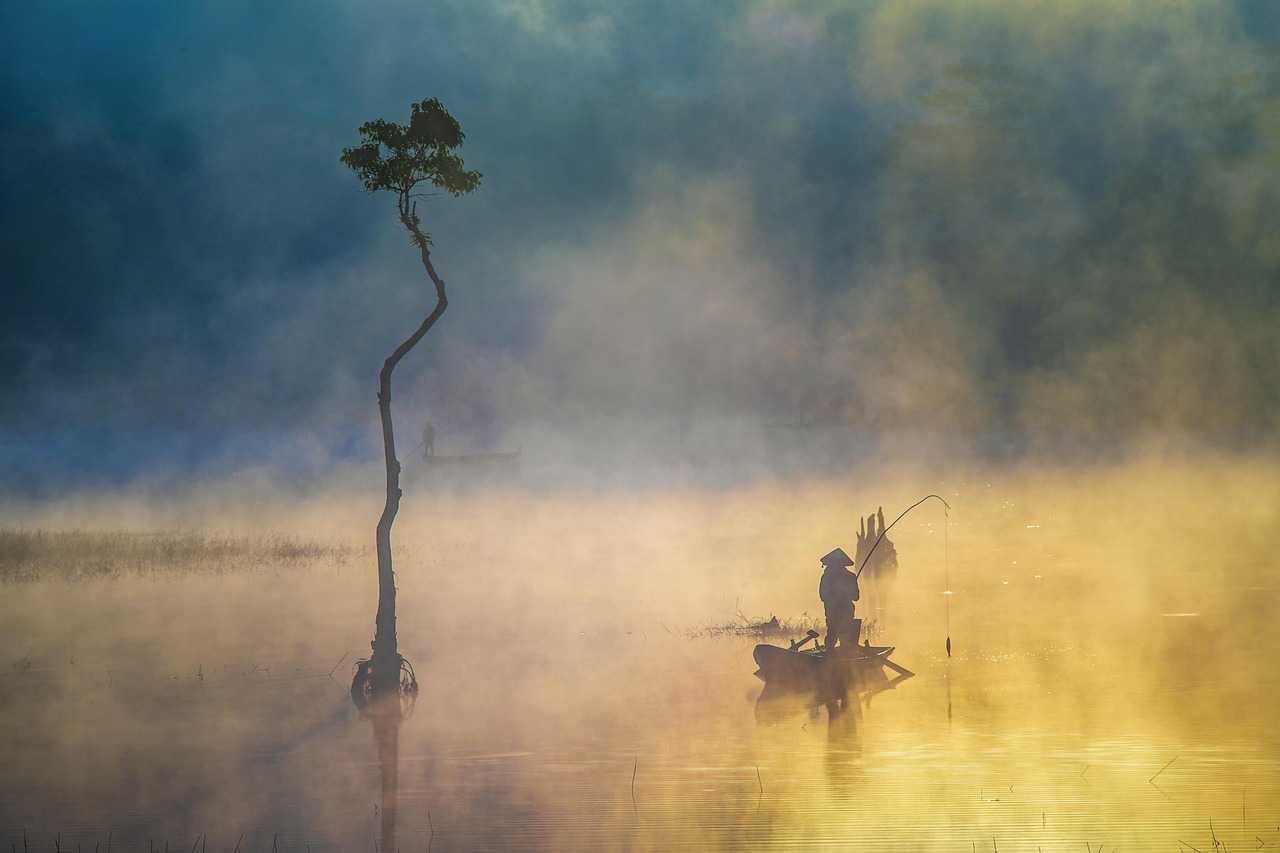
The first time I saw real fog on the water, I was nineteen and had no idea what I was looking at. I had gone down to a small lake before sunrise, mostly out of restlessness, and I stood at the edge while the world rearranged itself. The fog did not descend. It rose. It came up off the surface of the lake in slow ribbons, as if the water were breathing, and within half an hour the far shore had simply stopped existing. There was only me, the near reeds, and a soft grey nothing where the rest of the world used to be.
I have chased that morning ever since. Not literally — I am not a person who sets alarms for weather — but in the sense that I now understand fog as one of the great gifts a wetland can give you, and I try to be available when it comes. It is a rare thing, and it cannot be summoned. It requires the right temperature, the right stillness, the right patience on the part of the water. And it requires you, if you want to see it, to be there before it burns off.
The World Reduced to Essentials
What fog does, more than anything, is simplify. The far bank disappears. The trees become suggestions. Sound arrives from nowhere and everywhere at once, a heron's croak, a fish rising, your own breath. You cannot see what is coming, and for a little while, this is not frightening. It is restful. The eye, which spends all day being pulled in a hundred directions, is finally given nothing to do but look at what is actually here.
I have come to think of these mornings as a kind of reset. Not in the self-help sense, not a productivity tip, but in the older sense of returning to something. The fog does not add anything to the world. It removes. And what is left, once the distractions have been dissolved, is often enough. A few reeds. A patch of open water. The sound of something moving that you cannot see and do not need to name.
Writers have always loved fog for this reason. It is a natural metaphor for uncertainty, for grief, for the slow work of not knowing. But I think it is also a metaphor for attention. To be in fog is to be forced into the present tense, because there is no future visible and no past worth remembering. There is only this grey moment, and the way the water moves underneath it.
Staying Until It Lifts
The discipline of fog is staying. It is easy to arrive, take one look, and leave when the view is obscured. But if you stay — twenty minutes, forty, an hour — the fog will eventually begin to lift, and the world will return in pieces. First the far bank, then the trees, then the sky. The heron that was a sound becomes a shape again. The lake remembers its own size. And you walk home with the strange feeling of having been somewhere that no longer exists.
I do not know how to recommend this to anyone except to say: go early, go alone if you can, and do not bring an agenda. The fog will do the work. It always does.