
 Cattails are the punctuation of the marsh — commas, exclamation points, and the occasional ellipsis of a broken stalk.

Downstream on a Sunday: A Slow Drift
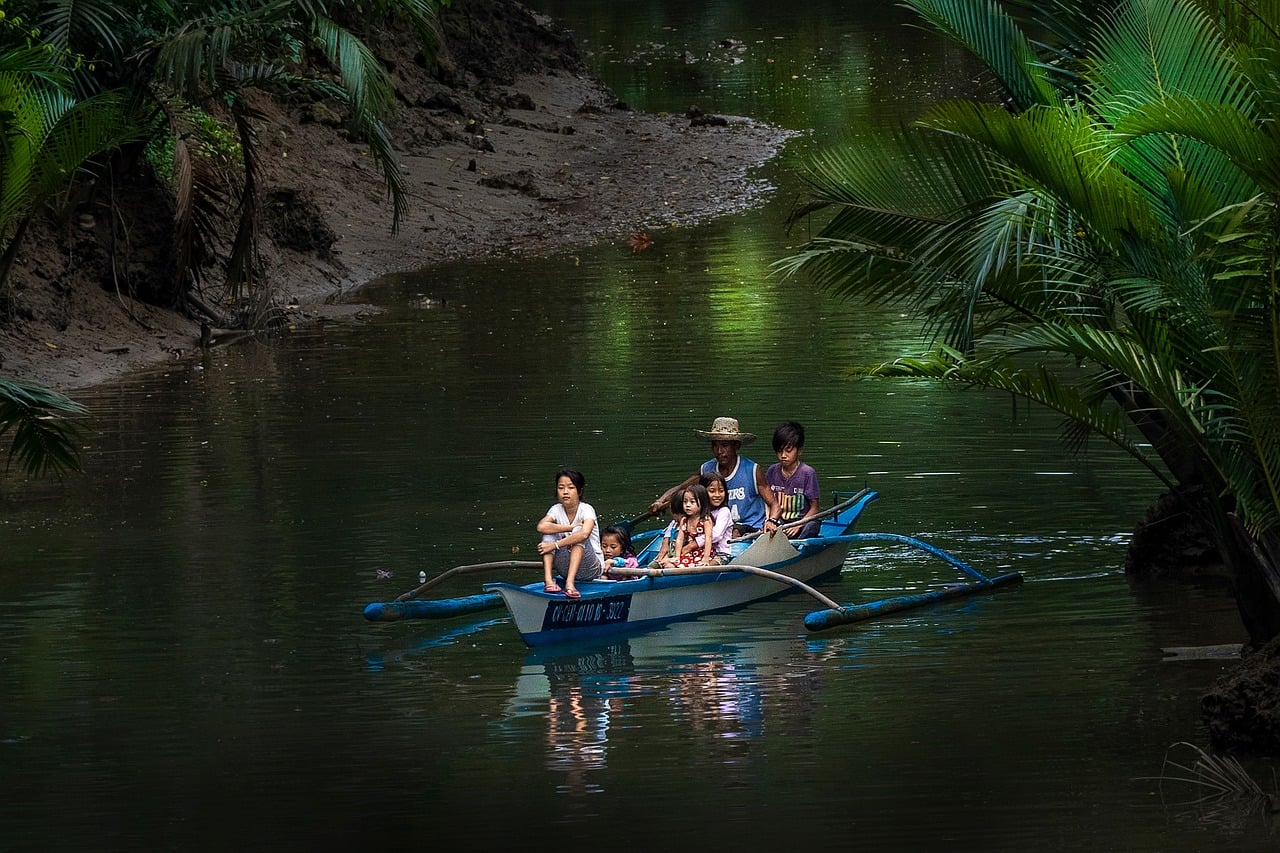
The river did not care that it was Sunday. It did not care that I had a to-do list waiting at home, or that the week ahead was already filling up with obligations I had not agreed to. It simply moved, the way it had been moving for centuries, and it invited me to move with it. I had put a canoe in at the old bridge around nine in the morning, and by noon I had gone perhaps three miles — which is to say, I had gone exactly nowhere, and that was the point.
There is a particular kind of freedom in floating downstream with no destination. You cannot be late. You cannot take a wrong turn. The current decides everything, and the current has no opinions. I lay back in the stern with my paddle across my knees and let the river carry me past banks crowded with jewelweed and elderberry, past fallen trees whose roots still clutched the soil like old fists, past the occasional great blue heron who lifted off with an indignant croak and vanished around the bend. The sun moved slowly across the sky. The water made its low, patient sound against the hull. I did not think about anything in particular, which is the rarest thing I know how to do.
The Art of Going Nowhere Slowly
We are told, from a very young age, that movement must have a purpose. We walk to get somewhere. We drive to arrive. We exercise to improve ourselves. Even our leisure is often disguised labor — the hike that counts as cardio, the bike ride that tracks miles, the swim that burns calories. But a river does not exercise. It does not train. It simply flows, and the flowing is enough.
I have been trying to learn this from the river. I have been trying to let some of my movements be purposeless. A slow drift downstream. A walk with no route in mind. A morning spent sitting on a log, watching the light change on the water, with no expectation that I will produce anything or learn anything or become anyone. It is harder than it sounds. The mind rebels. It wants to be useful. It wants to be somewhere else. It wants to check the time.
But the river is patient with me. It does not judge my restlessness. It simply keeps moving, and eventually my restlessness moves with it, and the two of us drift together past the same green banks, past the same nodding reeds, past the same small turtles slipping off their logs into the brown water. By the time I reach the take-out, I am usually a different person than the one who put in. Not dramatically different. Just quieter. Just a little more willing to let the day happen instead of forcing it.
What the River Teaches Without Trying
I have learned more from slow rivers than from most books. The river has taught me that obstacles are temporary. It has taught me that the shortest path is not always the best one — sometimes the long way around the island is the only way that works. It has taught me that you can carry a great deal of weight and still move gracefully, if you let the current do most of the work. It has taught me that there is no shame in going slow.
Most of all, the river has taught me that being present is not something you achieve once and then possess forever. It is something you practice, the way you practice a musical instrument or a foreign language. Some days you are fluent. Some days you stumble. But the river does not care. It will keep offering you the same lesson, day after day, bend after bend, until you finally learn it or until you stop showing up. And even then, it will keep flowing without you, the way it has always flowed, the way it will always flow, long after your Sunday canoe trip is a dim memory and the to-do list has been thrown away.
I pulled out at the old mill around four in the afternoon, tired in the good way, my hands smelling of river water and my mind quieter than it had been in weeks. I drove home slowly, the windows down, the evening light slanting through the trees. I did not accomplish anything that day. I did not check off a single item on any list. And yet I felt, for the first time in a long time, that I had done exactly what I was supposed to do.